• Knee and Shoulder Arthroscopic and Reconstructive Surgery
• Orthopedic Sports Medicine Specialist

Mark Maffet, MD

Mark Maffet, MD

Dr. Mark Maffet is a sports medicine specialist trained in the latest, cutting-edge techniques of minimally invasive reconstructive and arthroscopic surgery of the knee and shoulder. He and his office staff strive to help you through your orthopedic injury with a unique combination of experience and technology with a personal touch.

  • Fellowship Trained in Sports Medicine
  • Board Certified
  • Assistant Professor at the Baylor Sports Medicine Institute

Read more about Dr. Maffet

Latest Article: Treatment of the First Time Shoulder Dislocation

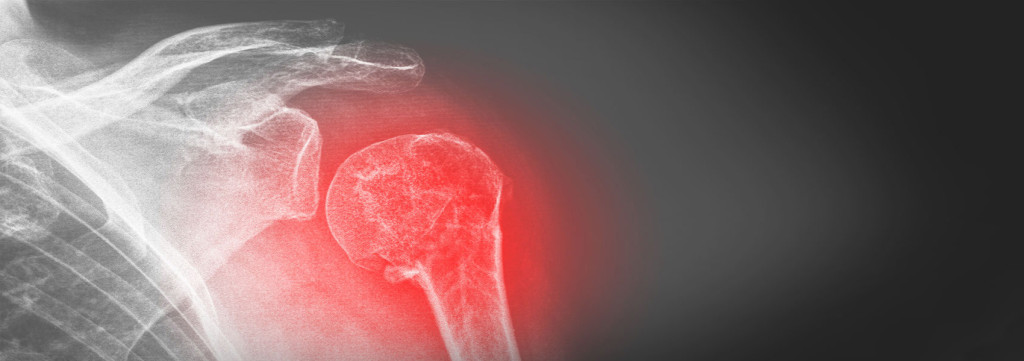
Many patients come to my office after a shoulder that has dislocated for the first time.  Often this follows a trip to the emergency room where x-rays can be helpful in confirming the diagnosis and the direction of the dislocation.  Most commonly the acute traumatic dislocation is anterior.  What is the right thing to do at this point?

Numerous, well- controlled studies still support non-operative treatment of most patients with a first time dislocation.  Over the age of 27, about 2 out of 3 will not have another dislocation or symptoms of instability.  The rate of recurrence, however, can be much higher in the younger, active patient.  In some studies, this recurrence rate was found to be as high as 90%.  The military academies for many years have surgically fixed these first time dislocations.  In this setting there is often an important reason a recurrence could be a serious problem.

As surgical treatment has become less invasive with arthroscopic techniques becoming just as successful as open techniques, an increased interest has arisen in perhaps fixing the younger, active athlete after a traumatic, anterior, first time dislocation.  It is my typical recommendation, though, to treat the first time dislocation conservatively with a temporary sling and shoulder rehab exercises as soon as discomfort allows.  I then allow a return to sports as tolerated.  However, if the shoulder comes out a second time, it will inevitably come out again.  Recurrence or any persistent symptoms of instability despite appropriate rehab are indications for surgical repair.